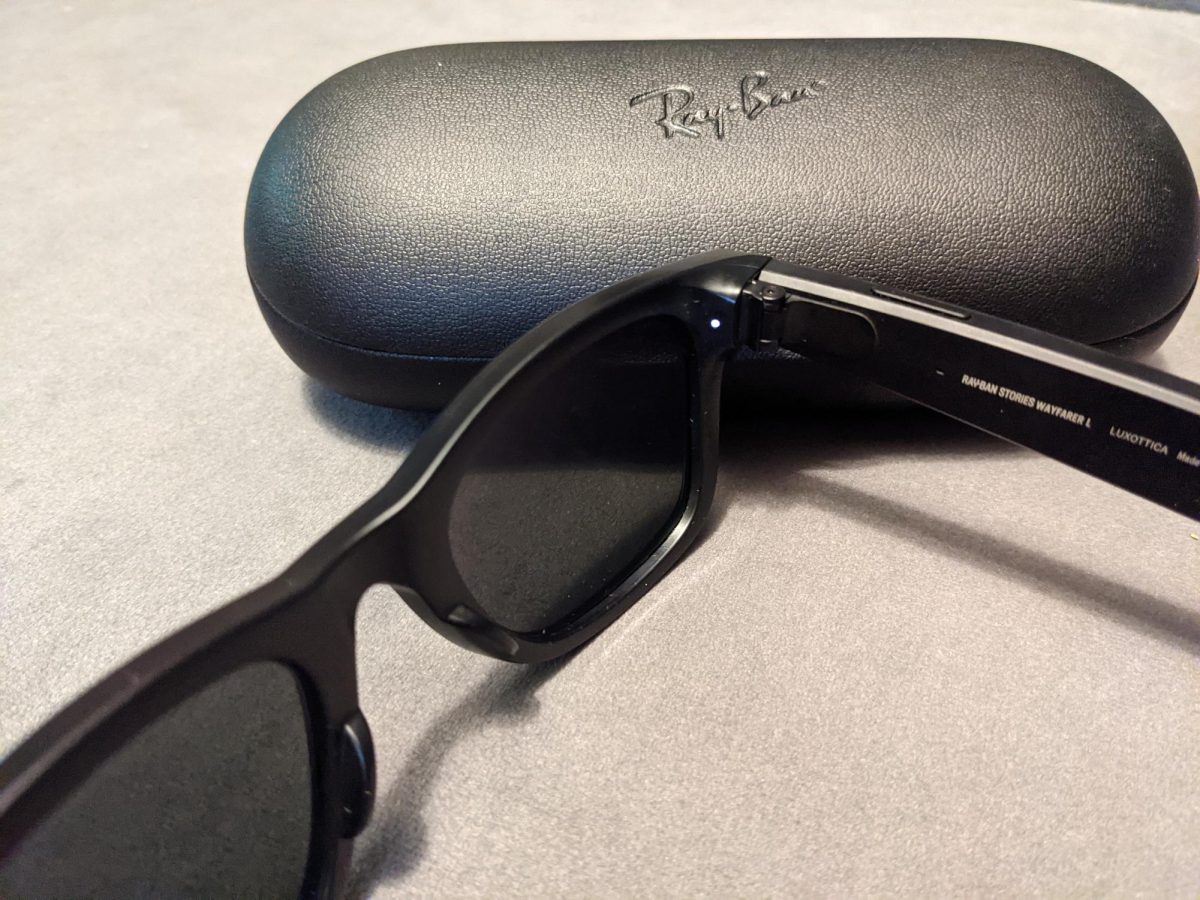
Ray-Ban Meta Glasses, with integrated artificial intelligence, have found their way to AMSA, but the administration has been quick to act on how they violate existing school policy and how they can actually break Massachusetts law.
So what are these things, and what can they do?
Meta glasses, specifically the popular Gen 2 Smart Glasses, feature a wireless, ultra-wide camera lens that can record in 3K, with speakers that come with a directional sound system and 90 percent background noise reduction for calls.
One of the things that is extremely troubling on the school front is that there is also a hands-free, voice-commanded AI that can identify objects and even solve problems such as math equations.
These glasses came out last September and have been gaining popularity online, especially with young people filming pranks while wearing them and posting them on social media. This kind of popularity has inevitably brought them to schools.
Students using them to commit academic dishonesty in classrooms has been reported in high schools and colleges around the country.
Of course, many schools have quickly responded by revising handbook policies and banning the smart glasses outright, including the College Board for its exams.
A few AMSA students have worn them to school upon return from winter break, and the school has been quick to respond, banning them on campus.
“[Recording in classrooms] is against Massachusetts general law under the wiretap law,” Upper School Dean of Students James Fortier said.
The Massachusetts wiretap law makes it a felony to secretly record without permission of all parties involved. The punishment can be up to a $10,000 fine and/or five years in prison.
AMSA was quick to act for another reason as well: The glasses can be customized to fit a person’s eyeglass prescription.
“We are kind of defaulting to the electronic device language in our handbook,” Mr. Fortier said. “We’re looking at what we need to adapt and change for next school year.”
For the moment, AMSA has added it to the electronic device section of the student handbook which states that students are not allowed to use cell phones or smartwatches at any time during the school day without the express consent of a teacher or administrator.
“We’re trying to get further information out to our families that are making these decisions, maybe not knowing the impact they can have on the school environment,” Mr. Fortier said.
With tech companies pushing out and promoting new products, heightened by the allure of such things online, AI use in the workspace and in schools continues to present hurdles.
“For first and secondary education such as high school, really the setting is how do you use your mind and develop it well,” Mr. Fortier said. “There is a lot of fear of how AI takes away from the ability to develop your brain to problem solve.”